Friday, June 19, 2009

Friday Fiction

For those of you who like your fiction short, funny, and biting, head on over to PhyWriter's blog for a flash fiction piece that made me laugh (but, then, I'm twisted).

If the space monkey theme throws you, it's a reference to Joss Whedon's short-lived but much-loved television series, Firefly, in which one character asks another why there's a mess in the engine room: "Were there monkeys? Some terrifying space monkeys maybe got loose?" Great stuff.

--------------------------

My copy of the June book for the Christian Science Fiction & Fantasy Blog Tour didn't arrive by mail, so I bought a copy in a local store, not sure if I'd have time to read it before this weekend. I not only read it, I devoured it: Vanish by Tom Pawlik. The same for the July book, which arrived early: The Enclave by Karen Hancock.

Vanish is weird and suspenseful, and The Enclave is tense science fiction set in the not-too-distant future. Both are darn good yarns, intelligent, well written, and solid.

--------------------------

I'm still working my way through The Count of Monte Cristo. What a tale. One might call it Shakespearean, but Hamlet's revenge doesn't even come close to the twisty path trod by Edmond Dantes a/k/a the Count of Monte Cristo. But, like the work of Ol' Will, this is a classic that never fails to engage and to challenge the reader, wrapping profundity in the guise of entertainment.

--------------------------

Eric over at Working My Muse is enthusiastic for Jamie Ford's Hotel on the Corner of Bitter and Sweet, a novel that I have yet to read but is on my list. I need to shorten the current stack of books before adding to it. Ah, the travails of a bibliophile. So many books, so little time -- or money.

--------------------------

Heroic Fantasy Quarterly, an online magazine that specializes in -- wait for it -- heroic fantasy is set to publish its first issue in July. If you have short fiction or poetry in that genre, send it on over. Check out the submissions guidelines first, though, and read all the way to the end -- for a laugh, if nothing else!

--------------------------

For creepy fiction and poetry, check out Fear and Trembling magazine. For entertaining science fiction (including, ahem, my own), read Ray Gun Revival.

Saturday, June 13, 2009

Lost in Translation

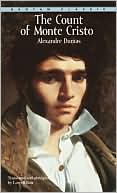
A few weeks ago, I purchased a new paperback copy of Alexandre Dumas's The Count of Monte Cristo, a book I read and read and read as a kid, and added it to the stack of books. Well, it has moved from the "to be read" pile to the "in progress" pile, and I'm wondering why I waited so long to get my own copy. Why keep checking it out from the library when I could have added it to my collection decades ago? But if I had, it wouldn't seem so fresh and intriguing now, because I probably would have read the book into oblivion, as has been the fate of a few other volumes whose bindings are dodgy and their dust jackets tattered. They're the Velveteen Rabbits of my literary world.

This particular translation of The Count is smooth and clean, easy to read, the work of Lowell Blair, who also translated several other classics (Madame Bovary by Gustave Flaubert, From the Earth to the Moon by Jules Verne, The Phantom of the Opera by Gaston Leroux, and more). Though abridged, it still retains all the necessary elements of the story, and -- I confess -- a skilled abridgment can result in a tighter, better novel.

There are several books featuring Monte Cristo and family. Several years ago, I purchased an early 1900s hardbound copy of Monte Cristo's Daughter, not written by Dumas but by a prolific American writer, Edmund Flagg. His name does not appear on that edition of the book, so the reader is forgiven for assuming that Dumas himself wrote it. I attempted to read it but was quickly bored; perhaps the story deserves another go, but my early reaction was that the translation could have been cleaned up to make a smoother reading experience. How was I to know it was written that way on purpose, and in English?

Translators have my respect. They take the words of other writers and interpret them for other readers, and it's a tricky task to remain true to author intent and style while presenting a clear, comprehensible, and interesting work that readers will enjoy in their own language.

A brief glimpse at the difficulties translators must overcome can be read here, at a page describing the difference in the number of verbs available in English as opposed to Spanish, and how readers are guided specifically in one language but expected to infer in another.

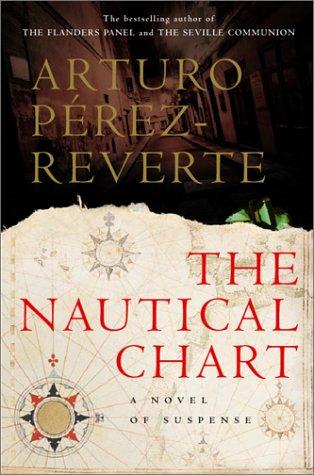
The Nautical Chart by Arturo Perez-Reverte was translated into English by Margaret Sayers Peden, a well-known translator whose work that I have read so far does not muddle the text (other books she has translated can be found here). In the translation of Perez-Reverte's novel, the English sings; it is my understanding that the Spanish sings, too.

Peden also translated some of Isabel Allende's work, none of which I have read, though I am told I must. I did try Gabriel Garcia Marquez's Love in the Time of Cholera, but just couldn't push past the first chapter or two. I might try his work again, through a different book.

I wish my high school Spanish had stuck around, so I could read some novels in their original language. However, I recall the challenge and the fun of translating pages of Don Quixote into English, an exercise reserved for advanced students. It's hard to believe I was ever part of that group.

If you have a favorite translation of a book, pass it along.

A previous post concerning The Count of Monte Cristo, among other books -- how they open, and how they end -- can be found here.

Photo Story

I drove one of the vans for a Club field trip this week, and we stopped at a local park to eat lunch and goof off. Of course, I had the camera -- it's part of my job to document and archive a photographic record of events -- and took several "sneak portraits" of kids by using the zoom and capturing faces when they weren't posed with the standard "say cheese" kind of expressions.

After being posted on a bulletin board, these photos are often given to the parents, just because.

The photo below isn't a portrait, but it's among my favorites. He's sitting still, but there's a story going on.


Summer Storm

We've been having curious weather lately -- bright days, then short but often fierce thunderstorms -- which put me in mind of a poem I wrote as an attempt to show a kid hesitant to enter the poetry contest at the Boys & Girls Club that 1) poetry is possible, 2) it doesn't have to rhyme, and 3) it can be about things that happen to us every day:

Indomitable

Metal tangs dusty air,
and devils dance—
lightning threads fire in the west.

Green sky looms,
thunder threatens—
gorged black clouds oppress the light.

Fire stabs, scattering
the blood of clouds—
fat warm drops blessing my face.

Trees bow before the wind
but I stand, arms outspread,
welcoming the storm.

c. 2006, Keanan Brand
True to the pattern set over the last few days, today is sunny so far, but there are predictions of thunderstorms every day into next week. I'm not complaining, though. I'll take rain over tornadoes any time!

Updated Sunday, June 14: Another fierce but brief storm overnight, one that knocked large branches down on my roof, which will now need to be inspected for holes. And, despite the sun, there was a short spate of rain. Go figure.

Friday, June 12, 2009

Late Night Check-In

It's now officially Friday morning, and well past time for me to, as the old-timers say, hit the hay.

The writers group met Thursday evening, and there was the usual exchange of news before settling down to reading whatever chapters were brought. Only two this time: one from a suspense novel in progress, and another from a fictionalized family history. And, as has become my wont, I brought nothing but my usual adamant -- some might say maniacal -- quest to rid the world of misused ellipses, misplaced modifiers, and missing commas.

Although, I have to admit, misplaced modifiers or missing commas can lead to humorous results; for a rough example, "After four years of law school then deciding to become a mechanic, drivers brought their cars to Scott's garage for the fastest, cleanest oil change in town."

Really? All those drivers went to law school then became mechanics? Well, then. They can change the oil in their own vehicles, can't they? Ol' Scotty'll be out of a job.

After a hectic week and a long day, my brain is on the verge of a sleep-induced shut-down. I've already fallen asleep at the computer several times during the past few days, and am bound to do so again during the summer. I hope someone else out there is having a lively time in my stead.

Sunday, June 7, 2009

Opening Salvos - 3: The Queen of Bedlam

Fiction writers know well the need to open their stories with some sort of hook, but the forms of those hooks vary. They are sometimes deceptively quiet, or brash and outlandish, frank with outright statements of apparent fact, or some combination of bold and calm, of fact and surprise, et cetera.

The perfect hook can often be the most difficult part of the book to write, and some authors wait to the final draft before finding exactly the right way to open the story. I've gone back after several drafts of a story, and totally changed the beginning. Perhaps it isn't relevant anymore. Perhaps it hints at directions the story never takes. Perhaps I've discovered the story doesn't begin there, but earlier, later, or somewhere else altogether, in a place I didn't expect.

Sequel to Speaks the Nightbird, The Queen of Bedlam by Robert McCammon opens quietly with interesting facts about the setting. Don't be fooled by the quiet, though; what follows is a dramatic and twisty tale.

'Twas said better to light a candle than to curse the dark, but in the town of New York in the summer of 1702 one might do both, for the candles were small and the dark was large. True, there were the town-appointed constables and watchmen. Yet often between Dock Street and the Broad Way these heroes of the nocturne lost their courage to a flask of John Barleycorn and the other temptations that beckoned so flagrantly on the midsummer breeze, be it the sound of merriment from the harbor taverns or the intoxicating scent of perfume from the rose-colored house of Polly Blossom.

The nightlife was, in a word, lively. Though the town awakened before sunrise to the industrious bells of mercantile and farming labors, there were still many who preferred to apply their sleeping hours to the avocations of drinking, gambling, and what mischief might follow those troublesome twins. The sun would certainly rise on the morrow, but tonight was always a temptation. Why else would this brash and eager, Dutch-groomed and now English-dressed town boast more than a dozen taverns, if not for the joy of intemperate companionship?

But the young man who sat alone at a table in the back room of the Old Admiral was not there to seek companions, be they of humankind or brewer's yeast. He did have before him a tankard of strong dark ale, which he sipped at every so often, but this was a prop to blend into the scene.
In the previous Opening Salvos posts (read Opening Salvos - 2: Old Man's War, and Opening Salvos - 1: In a Dark Wood), I have discussed changes that in my humble editorial experience could have improved the first few paragraphs of published works, but I wouldn't change a thing about this one. It works, and the reader needs every detail to better understand what happens next -- which I shall not reveal, so that you may experience this bizarre, intriguing, disturbing, and even funny, yarn for yourself.

----------

On his website, McCammon has an excellent article about writing frightening fiction: "Innocence and Terror -- The Heart of Horror". One paragraph applies to all fiction, regardless of the level of horror included in its pages:
I like to read a good, go-for-the-gory-gusto horror novel every now and then, but they don't stay on my shelves. I read them and toss them out. The novels that stay do more than terrify. They resonate with human emotion, though, and---yes, a kind of innocence---long after the pages are closed. (emphasis mine)
Though I want it to entertain, I hope that my own work does more than provide a literary hors deouvres, but is a feast that sustains the mind and the soul. And, dagnabbit, I wish I could write like McCammon!

Friday, June 5, 2009

Movie Date with Mom

Just got back from watching Star Trek. Wa-Hoo! What a ride!

I'm behind most of the cinema-going public, having to wait often until movies come out on DVD before seeing them, and I had planned on going after work tonight to watch Knowing, (which is now at the discount theatre, and springing for a $2.50 movie with an interesting premise wouldn't shred the wallet), but then Mom called last night. She wanted to go to the movies, too.

So, after checking the listings, I called her at work today.

Her first choice was a certain flick that wasn't playing except during the afternoon, and she didn't want to see Knowing, since someone told her how it ends. "You want to see Star Trek?"

Like she had to ask.

I know I did. "Are you sure you want to see Star Trek?"

"Yeah. Why not? Besides, I know this science fiction writer--" She laughed.

Alrighty then.

After the phone call, I checked the wallet. Whew. A ten-dollar bill in the pocket; three dollar bills folded in with the coins. Just enough for dinner off the dollar menu at Burger King, and then the $8.50 ticket.


If anyone in my family is willing to lay down cash for an evening showing of a movie, we really want to see it. Mom actually pulled twenty dollars out of her account for this scintillating evening. I think she's becoming -- or, perhaps, she always has been, quietly -- a science fiction fan.

We arrived early enough to grab a couple seats high up in the back of the theatre. When the opening music started, I almost laughed out loud. Not because there was anything funny or wrong, but because the music was grand and wide and perfect. BAM. I was in.

Turns out, so was Mom. We were among the few who laughed in all the right places, and in a few that no one else in the surrounding seats seemed to think amusing. That's typical for this family, though. We have a skewed sense of humor.

Being a Trek viewer from way back, I listened for the signature lines -- "Damn it, Jim, _______(fill in the blank)" from McCoy, for instance, or "I'm giving her all she's got, captain!" from Scotty. The cast did an excellent job filling roles made famous by other actors, and I am reminded why I'm a J.J. Abrams fan.

I don't care about any dodgy science or any plot holes that folks have mentioned in their much more thorough reviews. I like to make up my own mind, and I know I like this film. It's intelligent, it's poignant, it's full to the gunnels with action, and I had a blast watching it.

So did Mom. She said more than once as we crossed the parking lot to our respective automobiles, "That was fun!"

What better review need there be?