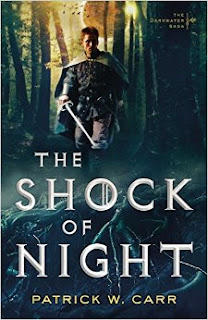
Ever been labeled something that puzzled you?
Recently, a fellow writer wrote that I was unethical. At first, I thought she meant someone else, and thought, "What does she mean? That's not true of that person," but then realized she referenced a blog post I wrote last year regarding how pride can get in the way of receiving feedback or criticism. No names were mentioned. In fact, the only person readers knew was involved was me, and I admitted that even now, after decades as a writer, my pride is still sometimes stung by harsh criticism.
Hey, even the most thick-skinned of veteran writers still wants his work to be liked and read, no matter how many bestsellers he has behind him. (I'd like to have at least one bestseller, but that's a goal yet to be reached.)
Another label put on me in the past -- this time by a publisher -- is "the editor who makes authors cry". That is not an appellation of which to be proud. By no means. My goal has been and always will be to help authors produce their best work. Sometimes, they can be so in love with their creations that they cannot see flaws or weaknesses, missed storytelling opportunities, or clunky sentences. When an editor tells them what needs revising, they don't receive the news well.
There is an implied compliment in the fact that someone else is taking the time to not only read one's work, but to help one improve it. However, we writers often react with affront, with offended pride and scathing words toward the "clueless", "high-handed", "overbearing" editor. We don't see his/her true intent. All we know is that we didn't receive the praise and the rubber-stamped approval we desired.
Before we slap labels on folks and burn bridges we might need to rebuild, might I suggest a bit of reflection? Some distance? Perhaps a walk, a rant to a friend, a scribbled diatribe in a journal? A good night's sleep? Prayer? Something that allows us to grow calm, to be objective, and not to say or do something we'll regret. (Related reading: "
What's Your Filter?")
We may find -- as I did while editing
Dragon's Rook -- that snarky, scolding feedback that shoots wide of the mark can still contain something valuable. When I stepped back and looked at the advice with cold objectivity, I saw a couple pieces I could use. As a result, I tore apart one scene that had been troubling me. The reconstructed version is many times better than the original.
So, then, what should I do when I'm now the one giving the ugly, scathing criticism?
Write it all out, and then don't say most of it.
Recently, a PR firm requested I review a new novel by a young author. After reading the back cover blurb and the dark, well-written prologue, I had high expectations for the book. Below is the review. For the author's sake, it will not be posted elsewhere, and has been edited here to obscure the author's identity.
~~ * ~~ * ~~ * ~~ * ~~ * ~~
Although marketed as contemporary literary fiction, this novel could also be described as speculative fiction, a mix of modern and futuristic, of post-apocalyptic dystopian and the quest for utopia-via-enlightenment, of a perverse coming-of-age/search-for-meaning story with a science fiction existentialist-absurdist tale.
Try saying that ten times, fast. ;)
[Story synopsis, character list, and website links have been omitted to preserve author anonymity. However, quotes from the novel text remain unaltered, but for the characters’ names.]
It is not often I write a review like this. I want to write only the positives, but the cons are weighty. To be blunt, this book needs an editor, for content as well as mechanics.
It runs the risk of being “a tale...full of sound and fury, signifying nothing,” (
Macbeth, Act 5, Scene 5). The writing is often preening and pretentious, but that could be the result of a conscious stylistic choice on the part of the author, matching the attitudes and egos of the characters.
Yet it sometimes feels like the writer is trying to make use of every high-sounding turn of phrase he can conjure or every word he can find in the dictionary. One is left wondering if, by the sheer volume and length of words, the author believes he has communicated—but, perhaps, I am not the audience for this work. I can wax lyrical with the most poetic of the poets, but prefer straightforwardness to
roundaboutation.
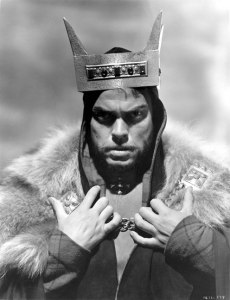
- Orson Welles as Macbeth
As
Macbeth might say, “Thou comest to use thy tongue; thy story quickly,” (Act 5, Scene 5).
Despite proofing errors (the repeated use of “causal” in place of “casual”, for instance) and some awkwardly-constructed sentences or phrases (what are “
cathartic muscles”?), there remain many quotable lines:
“I take it you’re the self-proclaimed chosen one?” (Leroy) asked. “Prophets are rarely successful. Even when they are, society kills them.”
(Walter’s) thick lips gave way to a line of crooked teeth. “Hence, it comes that all armed prophets have been victorious, and all unarmed prophets have been destroyed.” (p77)
Later in the same conversation:
“The day is not calm when you discover humanity to be ripe for the taking.” (p78)
And some lines read like refugees from a modern-day “
Jabberwocky”—they have a sound and a rhythm, and therefore the reader might almost think he understands their meaning or the author’s intent. But repeated readings reveal, no, the words really do make no sense.
This paragraph on page 121 transforms from poetic imagery to lyrical nonsense:
The notes of a distant piano played a melodic Bach and a blue Chopin to the beat of Kerouac. The sounds were unremitting as they’d always been in her mind. Real, but at the same time not real. Resonating. Vibrating. For she was a lollipop made of cherry and petrol, more given to the depths of trench coats and dark alleys; lethal-red lipstick, rocking a tear that was not a tear, but moisture secreting the nostalgia of an instinct held away from mankind by the missing link. From the real show and state.
Thank you, Google Translate. Sense to make, you do not.
The novel’s subtitle—[redacted]—is a clue to how readers are expected to view this work. The publisher’s mission statement, as well as the author’s explanation for the story’s existence, seem overly earnest, betraying a certain immaturity and youthful desire to ‘make a difference’:
[mission statement redacted]
Below is a quote from the introduction:
In the novel you’re about to read, I do not seek to victimize technology, nor to condemn our evolution, but to instill the realization that we are the product of our own thoughts, our own ideas, our own dreamed of reveries. We are the discomfort and leisure of humanity, the bright flame and its grey ashes. By nature we are born free.
Can’t argue with that last line. No doubt the author and I would find agreement on several other points. But how does one “victimize technology”?
Confession: I skimmed the second half of the book. Perhaps the story improved as it progressed. However, despite seeing interesting passages, I was not compelled to continue. The green-visored, cigar-chomping curmudgeonly editor who lives in the back of my brain could tolerate no more, and he suspects that publisher, editor, author, and the originator of the "editorial review" on the back cover are one and the same.
Nonetheless, [name redacted] is talented and intelligent, and is definitely an author to look for in the future. Give him time.
And his website waaaaay outclasses
mine.